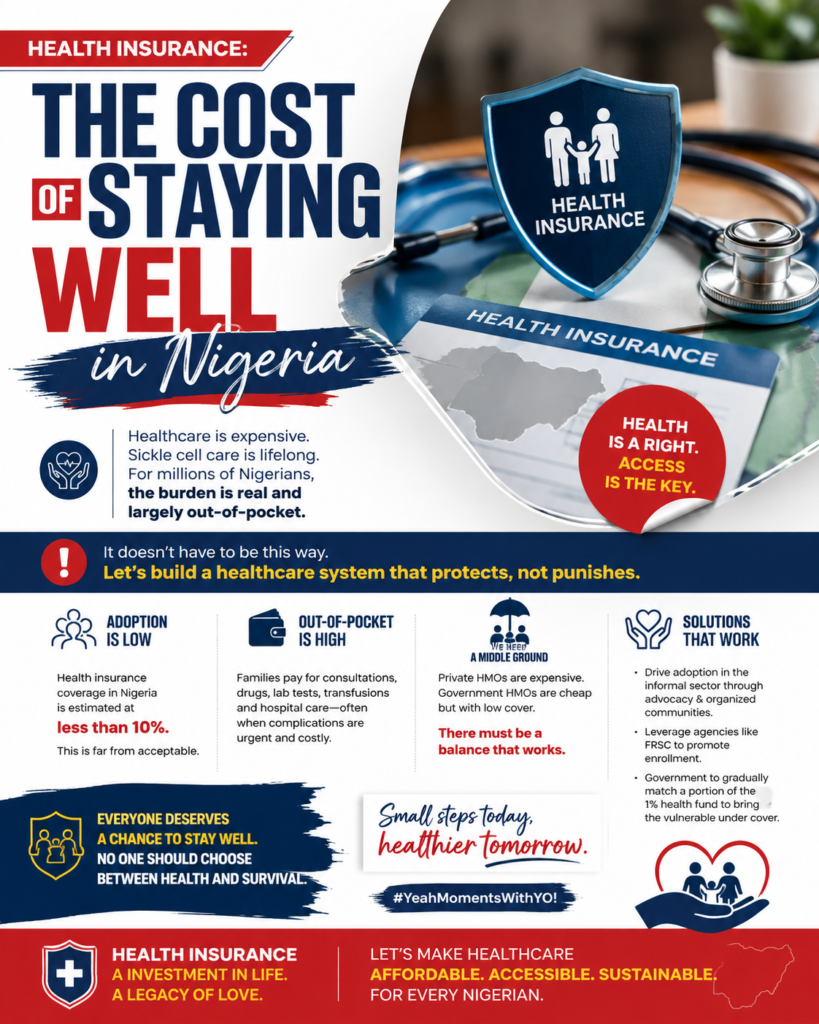
Healthcare costs in Nigeria, as it were globally, is expensive. When the burden of poverty is added, the cost becomes particularly consequential. The matter, then, becomes how are we paying for it – largely out-of-pocket.
Currently, the adoption of health insurance among Nigerians, across the government and private providers, is about 23 million of the entire population. This means about 10% of us are under health insurance, which is way low compared to what would be expected for a country as huge as 200 million (est). The private HMOs are generally expensive for an average Nigerian, the government HMOs are cheap but their cover is low, there must be a middle point.
First off, while the formal sector is about 7% of Nigeria’s economy, there is still a need to drive the majority into the health insurance net.
For the informal sector, there should be a balance of advocacy within organized informal communities and the use of such government agencies such as FRSC that issue licenses to drive adoption.
Then, let the government begin to gradually match a portion of its Basic Health Care Provision Fund (BHCPF), which is 1% of the Consolidated Revenue Fund, to bring the vulnerable under cover.
These solutions would not happen in a day. But the steps must be taken and be seen to be taken – including the use of documentaries, testimonies, radio drama, etc – because of the ripple effect of encouragement that these mediums can bring for Nigerians. A dara, all will be well!
#YeahMomentsWithYO!