
Nigeria has spent the greater part of the 4th Republic searching for an answer to a question that has outlived four administrations. How does a country police its over 200 million people, spread across 923,769 square kilometres total area, ranging from mangrove creeks, tropical rainforest, savannah belts, and a fast-encroaching Sahara desert?
For years, the answer was a single, centralised Nigeria Police Force stretched thin across 36 states and the Federal Capital Territory. This was a paltry 371,800 (est.) officers to police over 200 million, representing a ratio of 120 officers to 100,000 citizens which is far less than established global standard. Thanks to the Nigerian military, there are staggered victories over armed robberies, internecine conflicts, insurgency, banditry, kidnapping, terrorism, and other armed incidents. But the military is not purpose-built for civil affairs rather for conventional warfare.
That answer is now changing under President Bola Ahmed Tinubu GCFR. Since assumption of office, the Pres. Tinubu has been pushing for thorough security reforms, such as budgetary allocations, system overhaul, and now structural changes. These are significant security reforms that Nigeria has been attempting since the end of the Civil War in 1970. They include a constitutional amendment establishing State Police, nearly 50% expansion of the Nigerian Army’s divisional structure, and a nationwide Forest Guard corps designed to deny bandits and terrorists the delight to run amok in the so-called ungoverned spaces. Together, they represent a wholesale re-engineering of how Nigeria projects security from Abuja to the westernmost point around Badagry, southernmost point in Egeregere, Bayelsa, easternmost point in Mambila Plateau, and northernmost point in Kukawa, Borno state.
The Idea of State Police: Pres. Tinubu is transforming Decades-Old Debate into a Constitutional Reality
The idea of state police is not Tinubu’s original idea. Every politically conscious Nigerian, not only leader, knows about it. But it has always remained a debate – raised, talked about, and dumped on media shows, in the bars, and at organised conferences since 1999. The fear of gubernatorial abuse and inter-agency rivalry, and lack of political will and serious commitment from political leadership has refused to make it work.
What difference has Tinubu made? He, only, has finally chosen to convert ideas and debates into a legislative text, transmitted, debated and is making progress. President Tinubu transmitted the Constitution of the Federal Republic of Nigeria (Alteration) (State Police) Bill, 2026, to the House of Representatives to provide the legal framework within the National Constitution, 1999 (amended) for state police as part of a broader strengthening of Nigeria’s security architecture. The President framed the bill as a central pillar of his administration’s strategy to reorganise the country’s security architecture and better protect citizens. The bill, now cleared by both chambers, moves to the 36 State Houses of Assembly for ratification, the final procedural hurdle for any constitutional amendment in Nigeria.
Whatever the disagreement about how governors might deploy decentralised policing, it is difficult for any Nigerian to dispute that this ongoing legislative process represents the best state policing effort ever in Nigerian history. To prevent the abuse of power and other concerns, there is an ongoing National Policing Bill which will serve as the operational manual. This document will introduce a national safeguard that no governor or political officer can order or enforce arbitrary arrests or persecute opponents; establish a national minimum standard for funding, recruitment, training, intelligence sharing, and arms control; and determine the provisions for a state’s readiness to adopt a standing state police, among other frameworks.

A New Sheriff Chosen for a Reason: IGP Olatunji Rilwa Disu
The process to attaining full structural reforms for state policing is on; yet, the Federal Police will never be discarded. Even structural reform means little without competent leadership to execute it. It is on this premise that Pres. Bola Ahmed Tinubu’s most closely watched personnel decision of the year has played out. In February 2026, the President elevated Olatunji Rilwan ‘Tunji’ Disu to the position of Inspector-General of Police, Nigeria’s 23rd indigenous IGP, succeeding Kayode Adeolu Egbetokun.
The appointment was not a gamble on an unknown quantity. Disu is a career police officer with more than three decades of service, a professional journey defined by intelligence-led operations, tactical field command, administrative leadership and a consistent emphasis on community-oriented policing. His résumé reads like a tour of the Force’s most demanding assignments: Assistant Inspector-General of Police at the Force Criminal Intelligence Department (FCID) Annex, Assistant Inspector-General of Police at the Force Special Protection Unit (SPU), Commissioner of Police in the Abuja FCT and in Rivers State, Commissioner for Administration and Intelligence at the Force Intelligence Bureau, and Deputy Commissioner heading the Intelligence Response Team. He also led the first-ever Nigerian Police contingent to the African Union Mission in Sudan in 2005, later serving as Acting Chief of Staff during that Darfur peacekeeping deployment, as an early sign of the multinational security coordination experience he would later bring to the top job.
But it is his six years commanding Lagos State’s Rapid Response Squad, from 2015 to 2021, that shaped his public reputation most decisively. Between 2015 and August 2021, Disu reshaped the identity of the RRS, branding his officers as ‘The Good Guys’ in a deliberate effort to promote professionalism, restraint and citizen-friendly policing. That record of his, half a decade ago, followed him into his confirmation process early 2026.
The President himself, in transmitting IGP Disu’s appointment for the National Police Council’s endorsement, tied it explicitly to the security architecture reforms already under way, ‘Nigeria is challenged with banditry, terrorism, and other criminal activities. You will be part of the thinking and innovation to overcome them,’ signalling that the choice of IGP Disu was not incidental to the broader restructuring but central to it. Affirming his belief in the IGP’s capacity to deliver, Pres. Tinubu added: ‘I made this decision for you to assume this responsibility. I know your record. I saw the dedication you exhibited while you were in Lagos when I was governor.’
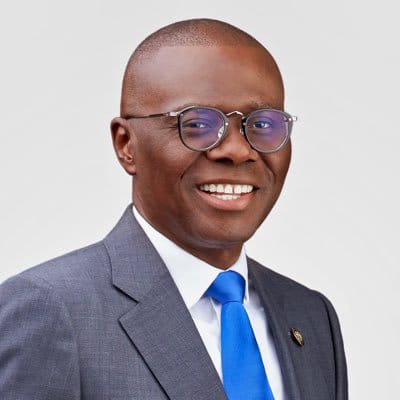
At the Nigeria Police Council session ratifying his appointment ahead of his swearing-in by President Tinubu, the Governor of Lagos State, Gov. Babajide Olusola Sanwo-Olu commended Disu for his exemplary service as RRS Commander between 2015 and 2021, a tenure that earned both Disu and the unit recognition for excellence in crime control, ‘Disu has served with exceptional leadership for over three decades and has a strong track record of performance. Having worked across different commands, I believe in his capacity to deliver on his new assignment,’ while the Governor of Nasarawa State, Gov. AA Sule and the Minister of the Federal Capital Territory, Nyesom Wike separately praised the appointment as grounded in an excellent career record.
That Lagos-forged reputation was on full display when IGP Disu returned to the city that made him the nation’s most senior police officer. In what was widely described as a symbolic full-circle moment, the IGP paid a visit to the Lagos State Security Trust Fund (LSSTF) headquarters in Ikeja, where he openly credited the organisation’s operational support during his RRS years as a major factor in his rise to national leadership. ‘I am so happy to be here today. This is one of my greatest days because as a Commander of Lagos Rapid Response Squad (RRS), I had a wonderful time with LSSTF. LSSTF is a model that virtually all the states in Nigeria have come to understudy us, even Force HQ came and they started the version of RRS in Abuja FCT. They made our jobs very easy. I had 2000 men to manage, I had many operational vehicles, I had 40 Armoured Personnel Carriers (APCs) at a point working in perfect condition, I had 3 helicopters, my own patrol vehicle came in set so that when one is being serviced, the other one is working.’

Received by Executive Secretary/CEO of LSSTF, Dr. Ayodele Ogunsan, the visit marked by renewed calls for sustained funding and the donation of an operational vehicle to the Fund’s Violent Crimes Response Unit underscored the enduring value of public-private collaboration in one of Nigeria’s most closely watched policing partnerships. Hailing his sterling career progression, Dr. Ogunsan hailed the sterling career progression of the IGP noting that ‘the name Disu is synonymous with excellence, discipline, and high standards in policing.’
He added: ‘The Executive Governor of Lagos State, Gov. Babajide Sanwo-Olu loves you immensely. You have shown us a unique style of policing by finding a critical balance between the people and the Police. You have succeeded in giving people hope that Police is your employee.’
Reading together the President’s and the Governors’ framing of the appointment and Dr. Ogunsan’s warm reception of the sitting IGP, one comes to the same conclusion that Disu’s ultimate rise to the standing of Nigeria’s no.1 police cop was earned in the field and conferred by the office. This is why, less than a year into his tenure, he continues to enjoy a depth of goodwill across Lagos’s security ecosystem, the National Assembly, and state governments that very few IGPs have ever carried into the job.
From Eight Divisions to Twelve: The Army’s Biggest Restructuring in Years
If state police addresses the civil policing gap, the second leg of the Tinubu security strategy will impact the military. President Tinubu has approved the expansion of the Nigerian Army’s structure from eight to twelve divisions, a move his office described as a landmark step to enhance the country’s security architecture and improve the Army’s operational effectiveness. The four new divisions will be headquartered in Makurdi, Ilorin, Jalingo and Benin City, filling coverage gaps across the North Central, North East and South-South regions. It comes bundled with approval to recruit 28,000 additional personnel, alongside the acquisition of new military platforms and equipment, improvements to troop welfare, and continued investment in operational readiness.
This new structure is expected to improve command and control, decentralise military decision-making, strengthen border security, enhance protection of critical national infrastructure and speed up the Army’s response to emerging threats nationwide. While this expansion has been celebrated, its real impact assessment will be measured in outcomes over time. The implementation is being rolled out in phases, with the first covering the establishment of the 5, 9 and 10 Divisions.
Attacking Banditry and Terrorism: The Forest Guard Initiative
This is the third aspect of the three-pronged approach. It is addressing the specific issue that banditry, terrorism, and kidnapping pose to our forests. This has caused Nigeria’s vast 1,129 forest reserves to be so labelled ‘ungoverned spaces’.Not anymore! In May 2025, the Federal Executive Council approved the establishment of a national forest guard system, ordering the recruitment of more than 130,000 armed operatives to secure the country’s forest reserves, with each state expected to recruit between 2,000 and 5,000 guards depending on capacity, under the joint supervision of the Office of the National Security Adviser and the Ministry of Environment. The logic is deliberately local: Forest Guards are drawn from the local government areas they serve, allowing them to leverage terrain familiarity and community trust in countering banditry, kidnapping and illegal exploitation of forest resources.
Deployment has moved from announcement to action. More than 7,000 Forest Guards have been recruited across Borno, Sokoto, Yobe, Adamawa, Niger, Kwara, Kebbi, Edo, Kogi, and Kaduna states, under the Presidential Forest Guards Initiative. The National Security Adviser Nuhu Ribadu has described this initiative as a decisive step toward restoring state authority in vulnerable communities.
Why the Economy Is Not a Separate Story
It would be a mistake to read Nigeria’s security reforms in isolation from what is happening to the broader economy, because the two are converging in a way that matters directly to ordinary households. Two of Nigeria’s most respected economic voices have, within days of each other, delivered strikingly similar verdicts on the direction of the economy.

Speaking at the 7th Africa Emerging Markets Forum in Abuja, the Director-General of World Trade Organisation (WTO), Dr. Ngozi Okonjo-Iweala praised the Central Bank of Nigeria’s progress in restoring confidence through monetary reform and exchange-rate stabilization. She urged Nigeria to sustain broad-based reform, improve its business environment and pursue prudent fiscal, debt and job-creation policy, so that its gains will translate into visible improvements in the lives of ordinary Nigerians.
Days later, at the 31st Nigerian Economic Summit, the Emir of Kano and former CBN Governor, Muhammadu Sanusi II said Nigeria’s economy is, for the first time in years, growing faster than its population, crediting the Central Bank’s tightening of monetary policy for successfully mopping up the excess liquidity that had driven years of instability. He attributed the turnaround directly to the apex bank’s discipline in withdrawing surplus funds from circulation over the preceding year, calling the reforms a foundation for sustainable, long-term growth. He, however, sounded a cautionary note, weeks earlier in a keynote at Enugu, that unreliable and unaffordable energy remains Nigeria’s single biggest obstacle to industrialisation and national development.
None of the brilliant initiatives of the Federal Government will be sustainable without money reaching the states and local governments that ultimately deliver security and public services on the ground. This is where the more consequential shift of increased and more predictable disbursements from the Federation Account Allocation Committee (FAAC) to states and local governments has become a grandiose change that governors across party lines have credited with easing chronic salary arrears for civil servants. In the past, salary debts often cause public frustration in the civil service and consequently in the general public, which could inadvertently fuel criminality. A workforce that is paid regularly and a security architecture properly resourced will ensure peace and stability.
If Nigeria can guarantee that farmers reach their fields, market traders move goods along rural roads, and forest-adjacent communities are not paying a ‘bandit tax’ through the implementation of the State Police, the expanded Army divisions and the Forest Guard corps, then the economy becomes better.