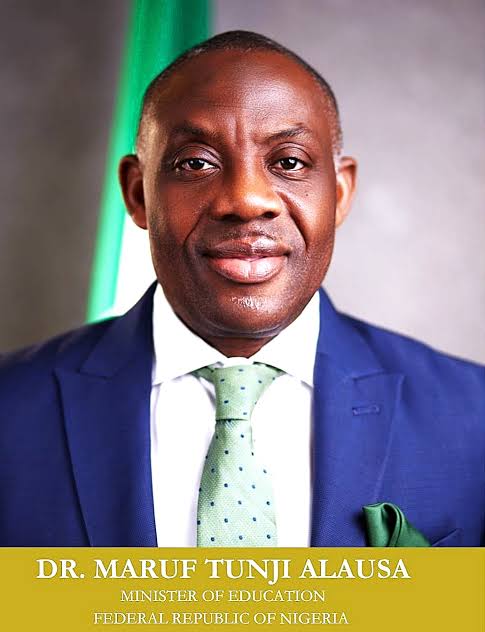
On Sunday, 19 April, 2026, the Silver Jubilee Awards of Independent Newspapers Limited produced a result that turned heads, but didn’t surprise many, in education circles.
Dr. Tunji Maruf Alausa, the Minister of Education, beat cabinet members from across sectors to emerge as Most Innovative Cabinet Minister of the Year 2025.
According to the organisers, the award followed a process that combined public voting, independent jury assessment, and editorial board review; three filters that made the outcome harder to dismiss as ceremonial.
For Alausa, a nephrologist-turned-minister who only took the education portfolio in October 2024, the recognition is arriving barely 18 months into a tenure defined by one stubborn idea: that Nigeria’s education system cannot be fixed by announcements alone.
Building the Foundation: Data Before Policy
The first thing Alausa did was arguably the least glamorous; he went looking for the numbers.
Nigeria had long governed its education sector on guesswork, with fragmented enrollment figures, unreliable teacher records, and no way to track a child who moved from one state to another.
He launched the country’s first comprehensive annual school census, enabling school heads to submit data online for the first time. Every student is now being assigned a Learner Identification Number tied to their location, creating a digital trail that follows them across institutions.
Alongside this, the Nigerian Education Data Infrastructure (NEDI) was built, a system of real-time dashboards and geospatial mapping tools that tells policymakers where classrooms are missing, where teachers are concentrated, and where children are dropping out.The logic is simple: only a government that sees its schools can fix them.
Skills, Jobs, and the TVET Gamble
The most visible of Alausa’s bets is the revitalisation of Technical and Vocational Education and Training (TVET).
TVET, as structured under his ministry, is tuition-free, federally funded, and covers more than 30 trades, from electrical installation and automotive repair to digital media and cosmetology.
Students receive monthly stipends, startup grants, and access to business loans. The ambition is to make skills training as credible a pathway as a university degree, targeting a labour market that is haemorrhaging young people into unemployment.
The numbers suggest early traction: 1.3 million people applied for the first phase through the digital platform, 58,000 have been matched to training centres, and over 5,600 technical teachers have been retrained.
Funding Secured, Infrastructure Expanding
Alausa’s tenure has coincided with a meaningful shift in the money available to the sector.He unlocked $552 million under the HOPE-EDU programme — a performance-based partnership with the World Bank and the Global Partnership for Education — targeting 29 million children, 500,000 teachers, and 65,000 public schools.
The education ministry described it as the fastest activation of education financing at that scale in the country’s history.
On the ground, over 4,900 classrooms were built and 3,000 renovated within six months, while 34 model schools were constructed. Medical schools and engineering faculties at Federal Universities of Technology across all six geopolitical zones are also being rehabilitated, a direct intervention against brain drain, aimed at keeping doctors, engineers, and scientists trained at home.
Reaching the Unreached
Nigeria holds the uncomfortable distinction of having the world’s largest population of out-of-school children.
Alausa’s approach here is unconventional. Rather than relying solely on public school expansion, he initiated a process to pay non-government-run schools to absorb children whose families cannot afford fees — a voucher system that covers tuition, feeding, and part of educational materials.
The programme is geo-tagged for accountability and has already been mapped in at least seven states, community by community. For girls specifically, the ministry has layered in scholarships, mentorship, and safer learning environments to improve retention.
The overhauled national scholarship programme — with a ₦6 billion budget, 15,000 beneficiaries targeted, and five per cent of awards reserved for students with disabilities — reinforces the equity logic running through his agenda.
These new ideas are under the Nigeria Education Sector Renewal Initiative (NESRI), the reform agenda focused on expanding access, improving quality, strengthening equity, and ensuring that the nation’s education system aligns more effectively with national development priorities.
What the Award Actually Measures
Innovation in government is rarely about invention. It is about doing old things in ways that actually work. What distinguishes Alausa’s 18 months is a consistency of approach: data, then policy; systems, not just speeches. Whether TVET graduates find good-paying jobs, whether NEDI dashboards change how states allocate teachers, whether the voucher children stay enrolled, those questions remain open.