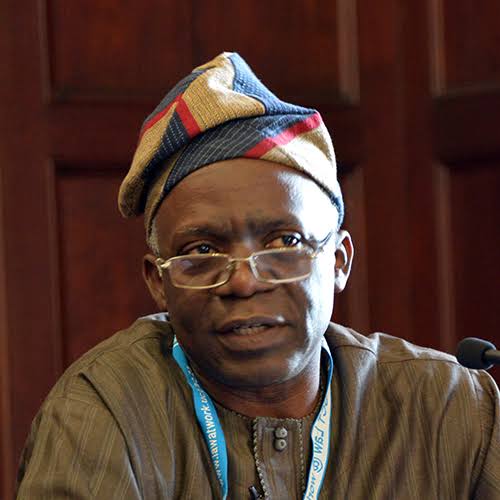
Human rights activist and Senior Advocate of Nigeria, Femi Falana, has urged the federal governments of Nigeria and Ghana to immediately halt their plans of reporting South Africa to the African Union (AU) over renewed xenophobic attacks, labeling the diplomatic route a complete waste of time.
In his remarks today Sunday, Falana argued that the AU lacks the constitutional teeth and legal mechanisms to compel South Africa to pay financial reparations to victims who lost lives, livelihoods, and properties.
Instead, the senior jurist insisted that only a direct, binding lawsuit filed at the African Court on Human and Peoples’ Rights in Arusha, Tanzania, can yield a enforceable remedy.
The legal challenge comes on the heels of an official breakdown in compensation talks between West African diplomats and the South African government.
Following intense anti-immigrant violence across major economic hubs, Nigeria’s Acting High Commissioner to South Africa, Alexander Ajayi, had begun documenting abandoned retail shops, real estate assets, and corporate investments to facilitate a state-level restitution claim.
However, the Cyril Ramaphosa administration summarily rejected the financial demands.
Pretoria defended its decision by asserting that the vast majority of the displaced victims were residing and operating businesses within the country illegally, a narrative that Falana sharply condemned as insensitive and highly disputed by the victims themselves.
Falana pointed out that the targeted violence and mass displacement of non-nationals are clear infractions of Article 12 of the African Charter on Human and Peoples’ Rights, which prohibits the arbitrary and collective expulsion of foreign migrants.
He further criticized recent public remarks by President Ramaphosa, who urged incoming migrants to respect domestic “laws and traditions”.
According to the senior advocate, such rhetoric from high-ranking state officials serves as an implicit endorsement of vigilante violence and systemic discrimination.
Drawing a sharp contrast in international law execution, Falana highlighted South Africa’s own aggressive utilization of global judicial bodies, referencing its high-profile genocide case against Israel at the International Court of Justice (ICJ).
He maintained that if Pretoria expects accountability on the global stage, it must equally be prepared to face regional human rights mechanisms for its consistent failure to exercise due diligence in protecting vulnerable African migrants within its borders.
Concurrently, the Senior Advocate issued a stern challenge to the President Bola Tinubu administration to correct its own domestic legal shortcomings.
Falana noted that despite championing regional integration, Nigeria has consistently failed to sign the critical declaration required under Article 34(6) of the African Court protocol.Without this declaration, ordinary Nigerian citizens and civil society organizations are legally barred from directly filing human rights petitions against violating states in Arusha.
He concluded that if the federal government truly cares about protecting its diaspora population from recurring cycles of violent mob attacks, it must grant its citizens unhindered access to continental justice systems.