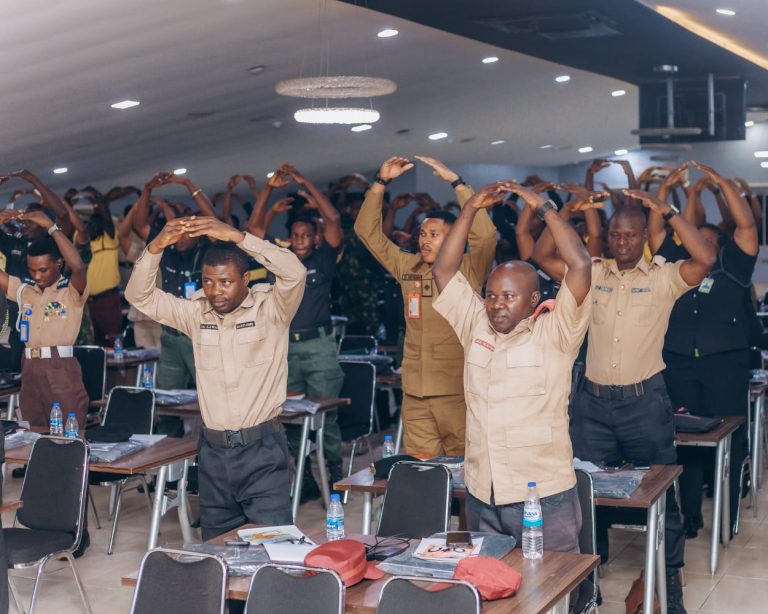
Security is often measured by the strength of the weapons, vehicles and technology available to those who protect society. Yet, beneath every patrol vehicle, communication device and tactical operation is a more fundamental asset that can determine whether the entire security architecture succeeds or fails. This is the health, resilience and judgement of the personnel operating it. For those entrusted with keeping Lagos safe, physical fitness and mental readiness are not private matters; they are part of the state’s operational capacity.
This reality is becoming increasingly important and shaping the decision in a city where security personnel must operate across a demanding environment of constant movement, long hours, emergencies, public pressure and rapidly changing threats. An officer who is physically exhausted, psychologically overwhelmed or neglectful of basic health indicators may be carrying a risk that is invisible until it affects performance.

LSSTF Executive Assistant
It was against this wider understanding of security that the Lagos State Security Trust Fund (LSSTF) devoted its September edition of the Statewide Multi-Agency Training Programme to a subject that is sometimes overlooked in security conversations, that is, protecting the people who protect everyone else. The programme reflected a broader philosophy championed by the LSSTF Executive Secretary/CEO, Dr. Ayodele Ogunsan, that investing in security is ultimately an investment in the people who provide it.
In his welcome remarks, Dr. Ayodele Ogunsan who was represented by the LSSTF Executive Assistant, Mrs. Adaobi Nwankwo, reiterated the Fund’s commitment to strengthening the capacity and welfare of security personnel through continuous, practical and multidisciplinary training. He noted that Lagos requires security personnel who are not only operationally prepared but physically, mentally and emotionally equipped to withstand the demands of their responsibilities.
According to him, the LSSTF’s approach recognises that training, welfare and operational effectiveness are interconnected. By bringing together security professionals and specialists from different fields, the Fund seeks to ensure that officers are equipped to make better decisions, maintain resilience and remain effective in the discharge of their duties.
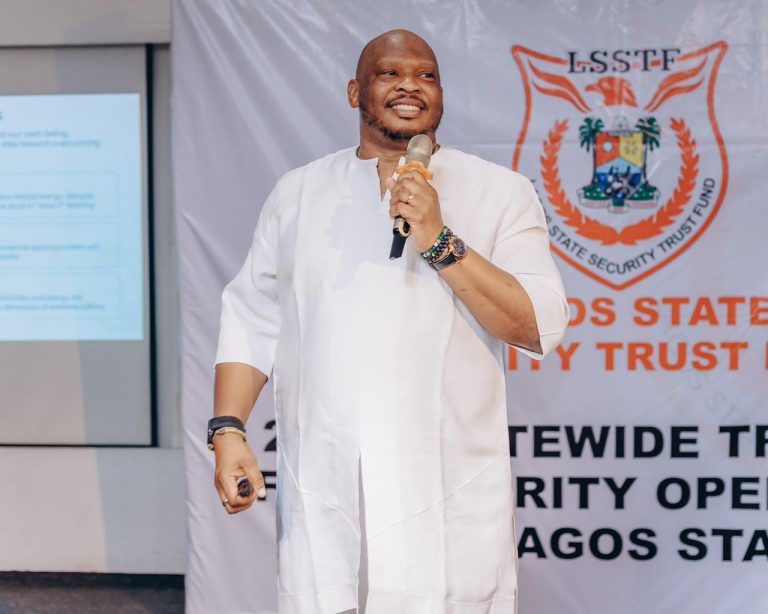
That philosophy of bringing people and institutions together was further reinforced by Professor Adedeji Oyenuga, Professor of Criminology and Security Studies at Lagos State University and an investigator, who facilitated one of the Day One sessions. Oyenuga described inter-agency collaboration as central to effective security in Lagos, noting that the state’s remarkable diversity makes it, in many respects, a microcosm of Nigeria. With people from virtually every part of the country represented in Lagos, he said, building “brotherliness” and strengthening the bond among security organisations and law-enforcement agencies should remain a strategic priority.
He argued that public-private partnership alone was no longer sufficient, stressing the need for a broader public-private-community collaboration in which citizens are recognised as active participants in the security architecture. “Security will be a failure if the community is not a part of it, and the community does not have the understanding of it,” Oyenuga said, emphasising that communities have important roles to play in ensuring the safety of lives and property.
The criminologist also challenged security agencies to move beyond occasional joint appearances towards deeper, practical collaboration. He advocated training arrangements in which personnel from different agencies work together in mixed groups, undertake assignments collectively and develop professional relationships that can translate into stronger cooperation during actual operations. “Training in the future should bring everybody together. Training in the future should also mix them very well,” he said, proposing workshops where personnel from different organisations would work as integrated teams.
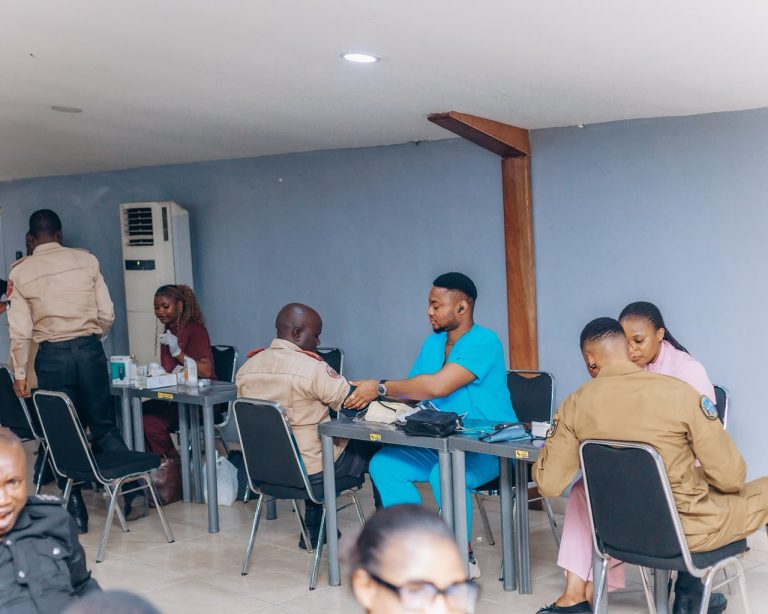
Leading the health intervention, Dr. Diya Ololade Oluwadamilola, Executive Director and Deputy Director of Clinical Services at Atlantis Pediatric and Multi-specialist Hospital, described the session as an effort to “protect our protectors.”A board-certified family physician, lifestyle physician and reproductive health specialist, Diya said security personnel routinely put their lives and, by extension, their families at risk to protect citizens. “Most of these security agencies, officers, usually put their lives on the line, put their families on the line to ensure that they protect us citizens of Lagos.” He said the medical component was designed to improve officers’ quality of life while helping them identify health risks before they become debilitating.
Central to his presentation was resilience, which he described as the ability to adapt and bounce back from adversity rather than an absence of hardship. “Being resilient is not being unaware of the challenges or the stress or the difficulties that we face as individuals, but it is about bouncing back, adapting, and ensuring that you overcome whatever it is that is besieging you.”Diya introduced the FRESH Protocol which consists of Food, Reduce stressors, Exercise, Sleep, and Health checks and vaccinations as a simple framework for healthier living.
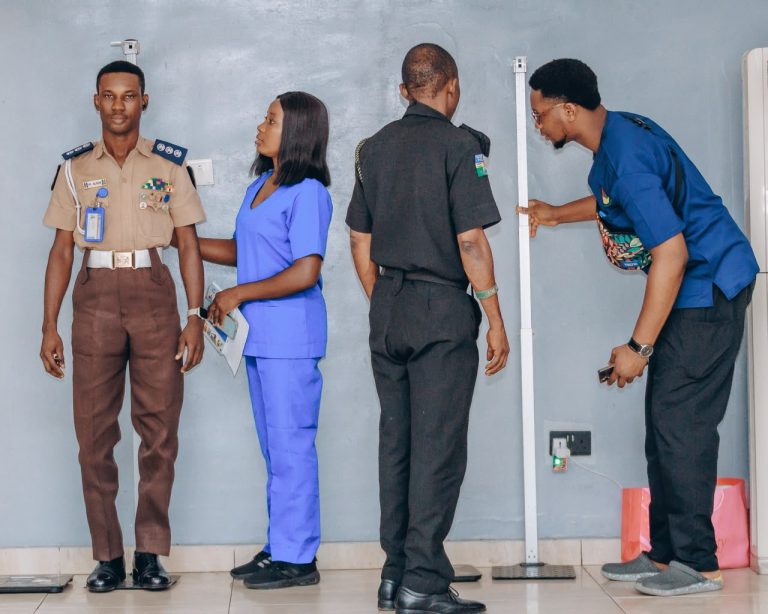
He also led participants through practical “know your numbers” checks, including blood pressure, blood sugar, weight and height, enabling officers to understand their body mass index and identify potential health concerns.
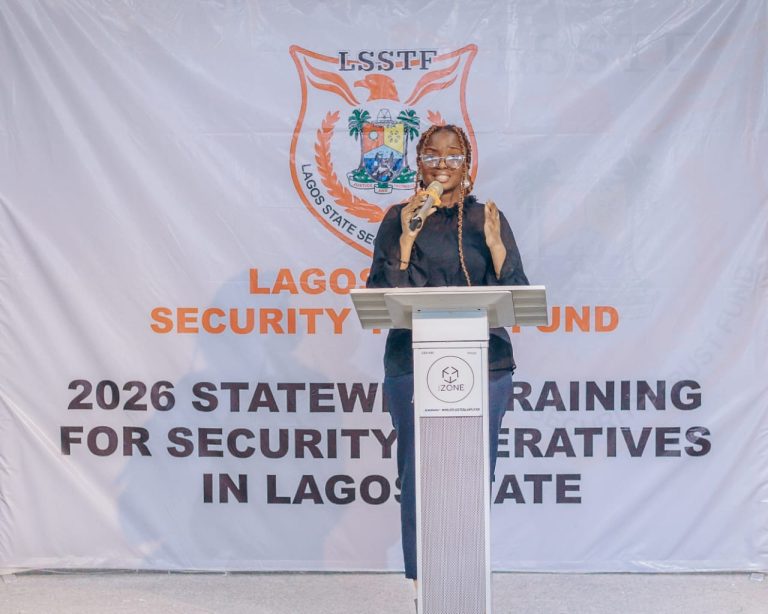
The nutrition session was delivered by Miss Titilayo Akindele, clinical nutrition consultant and founder of NutriFull Clinical Services, who focused on “Fueling the Force.” She linked nutrition directly to operational effectiveness, explaining how poor eating habits, dehydration and irregular meals can affect energy, concentration and long-term health. Akindele introduced the three pillars of warrior nutrition which are eating right, staying hydrated and timing meals properly, while demonstrating that healthy eating can be achieved with familiar Nigerian foods such as beans, yam, fish and leafy vegetables.She warned against excessive consumption of fried street foods, sugary drinks and instant noodles, describing them as “enemy foods” when consumed too frequently.
Her most memorable message was simple: “Your body is the most important piece of equipment. You maintain your weapon, your vehicle, your gear. Your body deserves the same discipline.” She urged officers to plan meals ahead, use weekends to prepare food in bulk where possible, stay hydrated and replace sugary drinks with healthier options such as water and nutritious snacks.
The September programme offered a significant reminder that the effectiveness of Lagos’ security architecture depends on the combination of resilience training, medical screening and practical nutrition education. For a city as economically vital and security-sensitive as Lagos, building a healthier, more resilient and better-prepared security workforce is not a luxury. It is part of the infrastructure of public safety.