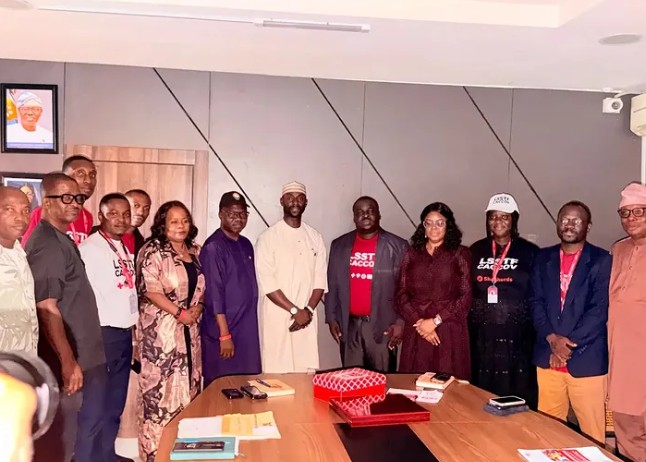
The Lagos State Security Trust Fund’s Campaign Against Crime, Cultism and Other Vices (LSSTF-CACCOV) has called for a stronger institutional partnership with the Lagos State Ministry of Youth and Social Development to protect young people from crime, substance abuse and other social vices while equipping them with the knowledge, values and opportunities required to contribute meaningfully to society. The call was made during a strategic engagement led by the State Coordinator of LSSTF-CACCOV, Dr. Moses Oladimeji, with the leadership of the ministry in Lagos. The meeting underscored the growing importance of preventive security, youth empowerment and coordinated social intervention in addressing threats capable of undermining the future of young people and the wider development aspirations of Lagos State.
Speaking during the meeting, Oladimeji said the future of society was closely tied to the ability of stakeholders to guide, educate and empower young people before they became vulnerable to criminal networks, drug abuse, cultism and other destructive influences. He explained that LSSTF-CACCOV had adopted a non-kinetic approach that prioritised education, advocacy, engagement and empowerment rather than condemnation or intimidation. “The youths are the future of this country. If you capture the youths, you have captured the future. That is why we must be deliberate in ensuring that they are properly guided, educated and empowered,” Oladimeji said.
According to him, adversarial forces often target young people because of their numerical strength, energy and influence on the future of communities and nations. He noted that the campaign had therefore taken its preventive message to schools, tertiary institutions, garages, churches and other youth-centred environments across Lagos. Oladimeji disclosed that the initiative had engaged students at institutions including Yaba College of Technology and the Federal College of Education (Technical), Akoka, with more than 1,500 students certified through one of its programmes.
He stressed that the scale of the challenge required collective action, adding that LSSTF-CACCOV could achieve more by working closely with the Ministry of Youth and Social Development and other relevant agencies. “We cannot do much without the support of the ministry. We want to fly on the wings of the Ministry of Youth and Social Development because you are already doing a lot in the area of youth development. We want to complement your efforts and ensure that our young people are not only protected but also empowered to become productive citizens,” he said.
Oladimeji further highlighted the risks associated with Lagos’ status as a commercial hub and the Centre of Excellence, noting that the state’s ports, airports and vibrant economic activities could also create opportunities for the circulation of illicit substances. He referred to recent drug seizures by the National Drug Law Enforcement Agency, including the destruction of substances valued at more than ₦3.1 billion, as evidence of the magnitude of the challenge. He said prevention remained critical, stressing that the campaign sought to reach young people early and communicate with them in ways they could understand. “We don’t go there and tell them they are wicked people. No. We speak the language they understand. We educate them, engage them and show them the consequences of their choices,” he stated.
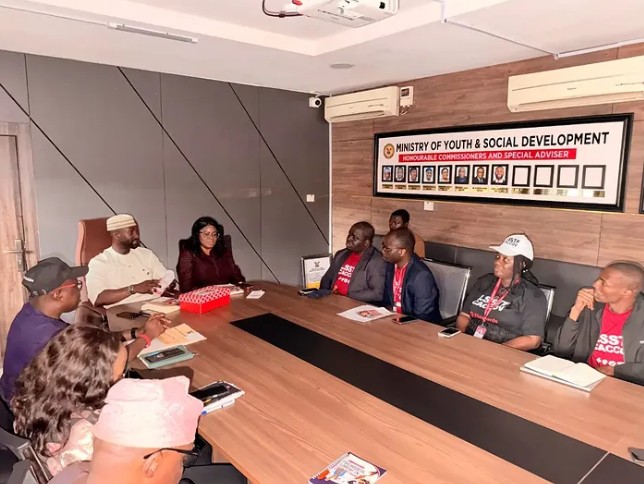
Responding, the Commissioner for Youth and Social Development, Mobolaji Abubakre Ogunlende, described the fight against substance abuse and other social vices as a collective responsibility that demanded sustained collaboration among government institutions, communities, civil society organisations and private-sector partners.
Ogunlende observed that the challenge cut across Lagos’ 20 local government areas and 37 local council development areas, making it impossible for the government alone to resolve the problem without the active participation of stakeholders. “Government cannot do it alone. We welcome partners who have initiatives that can help us address these challenges. This is Lagos, this is our Lagos, and everyone has a role to play in protecting the future of our young people,” the commissioner said.He explained that support for youth-focused campaigns did not necessarily have to be financial, noting that participation in awareness walks, public campaigns and advocacy activities could also make a significant difference.
According to him, the ministry was ready to work with LSSTF-CACCOV, describing both institutions as “partners in progress” and expressing its willingness to commence collaborative activities pointing out that the ministry has held three other meetings on the same issue on the day. “This is our third meeting today. And again, all of it is geared towards prevention, reduction, solution, you know, as the case may be,” he said.
The Permanent Secretary of the ministry, Pharm. (Mrs.) Toyin Oke-Osanyintolu, said the frequency of meetings and engagements on substance abuse within the ministry reflected the seriousness of the situation. She noted that children were reportedly experimenting with drugs at increasingly younger ages, warning that preventive education must begin early and be sustained across homes, schools, religious institutions and communities. “This partnership is not something we need to think about; it is a necessity. Prevention, prevention, prevention. Because it just takes one try,” Oke-Osanyintolu said.
She explained that drug dealers were developing attractive packaging and other strategies to lure children and young people, stressing the need to equip them with the awareness to identify manipulation and resist harmful influences.The Permanent Secretary urged stakeholders to adopt a proactive approach to reporting suspicious activities and protecting vulnerable young people. “We say something, we see something, we say something, and we will definitely do something,” she stated.
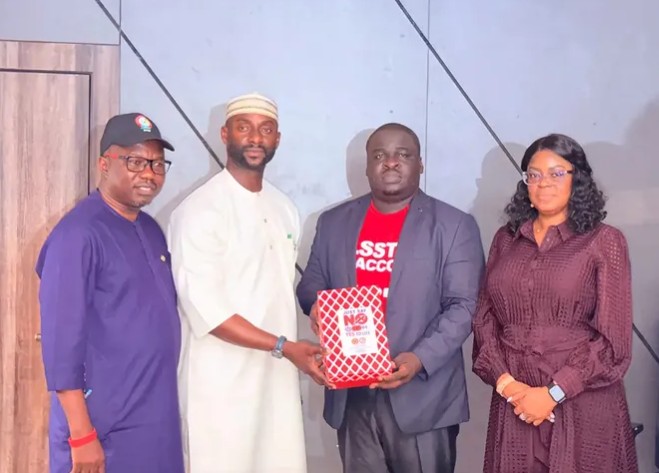
The LSSTF-CACCOV delegation included the Assistant State Coordinator, Mrs. Uzezi Akinwoleola; Head of Human Resources and Training, Prominence Promise; Head of Education, Advocacy and Empowerment, Joseph Akinwoleola; Head of Strategy, Digital Communication and Technology, Olugbogi Nathanael; and Head of Programmes and Outreaches, Meshole Emmanuel.
The engagement reaffirmed the need to position youth empowerment, social development and preventive security as interconnected priorities in Lagos’ development agenda. By strengthening collaboration, stakeholders can move beyond reacting to social crises and build a culture of early intervention, responsible citizenship and opportunity for young people.