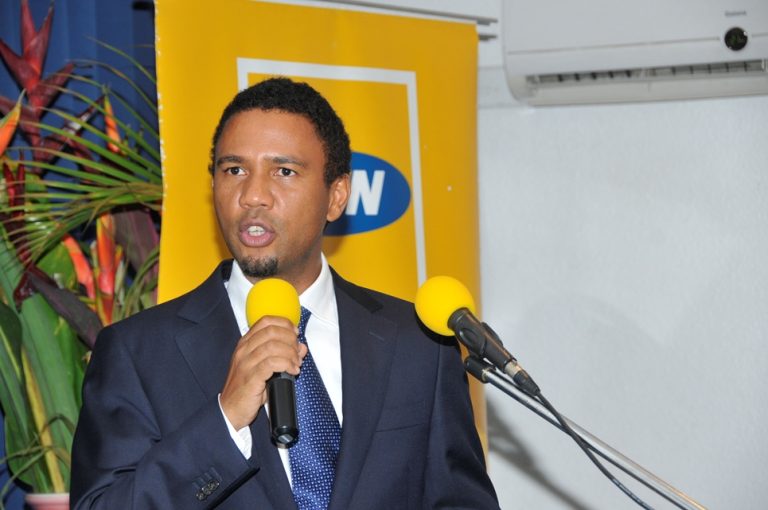
the CEO of MTN Nigeria
Telecommunications giant, MTN Nigeria Communications Plc has reported a 55.3 per cent increase in profit after tax to ₦1.17 trillion for the nine months ended September 30, 2026, driven by strong data revenue, growing subscriber numbers, improved operational efficiency and higher cash generation. The telecommunications company also recorded a 23.7 per cent increase in service revenue to ₦4.59 trillion, while earnings before interest, tax, depreciation and amortisation (EBITDA) climbed by 36.8 per cent to ₦2.62 trillion. The performance reflects sustained demand for telecommunications and digital services, particularly mobile data, as well as the company’s efforts to strengthen network infrastructure, improve operational efficiency and expand its digital financial services business.
In its financial results released on October 30, 2026, MTN Nigeria disclosed that its total revenue increased by 23.6 per cent to ₦4.61 trillion, compared with ₦3.73 trillion recorded in the corresponding period of 2025. Profit before tax also rose significantly by 59.4 per cent to ₦1.80 trillion from ₦1.13 trillion, while earnings per share increased by 55.3 per cent to ₦55.60.
The company attributed the improved performance to strong revenue growth, disciplined cost management, increased data adoption and continued investment in network capacity and quality. Data business drives revenue growthData remained the biggest contributor to MTN Nigeria’s revenue expansion, reinforcing the growing importance of digital connectivity to its business.
The company’s data revenue increased by 35.8 per cent to ₦2.68 trillion during the nine-month period, compared with ₦1.98 trillion in the corresponding period of 2025.Active data users grew by 12 per cent to 57.2 million from 51.1 million, while average monthly data consumption per active user increased by 16.2 per cent to 15.3GB.
Consequently, network data traffic expanded by 30.1 per cent. The number of smartphones connected to MTN’s network also increased by 12.4 per cent, bringing smartphone penetration to 66 per cent, an improvement of 0.9 percentage points. MTN said growing adoption of 4G- and 5G-capable devices, alongside rising demand for digital services, continued to support data consumption. Home broadband is also becoming an increasingly important contributor to the company’s growth strategy.
According to the company, its Fibre-to-the-Home (FTTH) service now carries approximately 13 per cent of total data traffic, helping to ease pressure on the mobile network while improving capacity and operational efficiency. Subscriber base expands to 94.7 million MTN Nigeria’s subscriber base increased by 10.9 per cent to 94.7 million as of September 2026, compared with 85.4 million recorded in September 2025.
Active data users rose by 12 per cent to 57.2 million, while monthly active users on its MoMo platform reached 3.2 million.
The growth in subscribers and data adoption highlights the increasing demand for mobile connectivity and digital services in Nigeria. Voice revenue also maintained positive momentum, rising by 11.1 per cent to approximately ₦1.50 trillion. The company said the growth was supported by an expanding subscriber base and targeted customer propositions, although average voice usage per subscriber faced pressure as customers increasingly migrated towards data-based communication. Digital revenue increased by 24 per cent to ₦88.3 billion, accelerating to 30.6 per cent growth in the third quarter.
Growth was supported by rich media services and mobile advertising, while enterprise revenue increased by 6.5 per cent, driven by bulk SMS, fixed connectivity and converged services.
Profitability improves as EBITDA margin reaches 56.9%
MTN Nigeria’s profitability improved significantly during the period, supported by stronger revenue generation and effective cost management.EBITDA increased by 36.8 per cent to ₦2.62 trillion from ₦1.92 trillion in the corresponding period of 2025. Its EBITDA margin expanded by 5.5 percentage points to 56.9 per cent, compared with 51.4 per cent previously. The improvement came as operating expenses increased by 8.5 per cent to ₦1.42 trillion, significantly below the growth recorded in service revenue.Cost of sales rose by 12.6 per cent to ₦566.5 billion, while depreciation and amortisation increased by 32.6 per cent to ₦631.9 billion, reflecting higher investment in network infrastructure. Net finance costs declined by 25.3 per cent to ₦277 billion, supported by reduced borrowings.
The company also recorded a net foreign exchange gain of ₦80.1 billion, compared with ₦55.6 billion in the corresponding period of 2025. These factors contributed to the 59.4 per cent increase in profit before tax and the 55.3 per cent growth in profit after tax.MTN Nigeria’s profit after tax margin also improved by 5.1 percentage points to 25.3 per cent.
Free cash flow rises 57.5% to ₦1.17 trillion
Beyond its revenue and profitability growth, MTN Nigeria recorded stronger cash generation during the nine-month period. Free cash flow increased by 57.5 per cent to ₦1.17 trillion from ₦742.6 billion in the corresponding period of 2025. The improvement reflects higher earnings and disciplined capital allocation, alongside continued investment in network infrastructure. Capital expenditure excluding leases increased by 14.2 per cent to ₦864.8 billion, compared with ₦757.4 billion in the previous year. Capital expenditure intensity stood at 18.7 per cent, within the company’s target range. Investment accelerated in the third quarter as MTN stepped up its 2026 network rollout to expand coverage, improve capacity, enhance service quality and support growing home broadband demand.
The company also disclosed that it maintained a net cash position of ₦47.7 billion at the end of September 2026, compared with ₦104.8 billion in December 2025. This followed the payment of ₦860.8 billion in dividends covering the 2025 final dividend and 2026 interim dividend, alongside increased network investment.MTN said its borrowings were fully denominated in naira and carried fixed interest rates, eliminating foreign exchange and floating-rate exposure on its debt.
MoMo revenue more than doubles despite fintech challenges
MTN Nigeria’s fintech business recorded mixed results during the period, with strong growth in its core mobile money operations offset by a decline in overall fintech revenue. Revenue from its core mobile money business increased by 102.2 per cent, supported largely by higher float income as customer wallet balances more than quadrupled to ₦43.8 billion from December 2025.However, overall fintech revenue declined by 25.9 per cent to ₦97.5 billion. The decline was largely attributed to the suspension of the company’s airtime and data credit service between April and June 2026. Following its resumption under a new multi-partner operating model, the service continued to recover, with revenue increasing by 78.5 per cent in the third quarter compared with the second quarter.
Another significant development was the migration of MoMo PSB to its new Alipay+ platform in August 2026. MTN said the platform provides improved reliability, additional features and enhanced security, creating a foundation for the expansion of its digital financial services business.Monthly active users stood at 3.2 million at the end of the third quarter, measured on the new platform, while transaction volumes increased by 69.1 per cent quarter-on-quarter.The company said customer migration and the onboarding of new users would support further growth.
Karl Toriola speaks on performance
Commenting on the results, MTN Nigeria’s Chief Executive Officer, Karl Toriola, described the third-quarter performance as very strong, noting that the company had reversed the temporary slowdown experienced in the second quarter. He said service revenue grew by 19.7 per cent in the third quarter, representing an 8.4 per cent increase quarter-on-quarter, with monthly growth accelerating to 21.6 per cent in September. According to Toriola, profitability expanded even faster, with third-quarter EBITDA increasing by 32.8 per cent, while the EBITDA margin widened by 5.8 percentage points to 58.7 per cent. For the nine months, he said service revenue grew by 23.7 per cent, while the EBITDA margin reached 56.9 per cent. Both indicators, he noted, were comfortably within the company’s medium-term guidance.
Toriola said: “Growth is increasingly volume-led, driven by more users, deeper data adoption, higher usage and rising demand for home broadband, supported by continued investment in network coverage, capacity and quality.” He also highlighted the improvement in the company’s fintech operations, particularly the more than doubling of core mobile money revenue and the recovery of its airtime and data credit service.
On operational efficiency, the MTN chief executive said the company’s efficiency programme continued to expand margins and strengthen cash generation despite energy cost pressures. He added that the gains were increasingly structural.“Our balance sheet is strong, with borrowings fully naira-denominated and at fixed rates, eliminating foreign currency and floating-rate exposure on our debt,” Toriola said. He expressed confidence in the company’s ability to sustain its growth momentum and deliver its financial guidance.
Outlook: MTN reaffirms growth guidance
Looking ahead, MTN Nigeria has reaffirmed its medium-term guidance of average service revenue growth of at least the low-20 per cent range and an EBITDA margin within the mid-to-high-50 per cent range. The company expects growth to be supported by subscriber expansion, increased data consumption, deeper digital adoption and the continued development of home broadband, digital and enterprise services. In fintech, its immediate priorities include completing the migration of customers to the new MoMo platform, increasing wallet activity, expanding service offerings and restoring the airtime and data credit business to expected levels by the end of November 2026.MTN also disclosed that the structural separation of its fintech business was progressing, subject to regulatory approvals.However, the company said it would continue monitoring operating conditions, particularly energy costs, inflation, foreign exchange developments, pricing behaviour and customer affordability.
While energy costs remain an important consideration, management said recent developments had increased its confidence in the margin outlook for the final quarter.Toriola said the company’s priorities remained sustaining revenue growth, protecting margins, expanding home broadband and rebuilding fintech momentum while creating sustainable value for stakeholders.
What the results mean for MTN Nigeria
The nine-month results underline the growing contribution of data services to MTN Nigeria’s business model and the importance of operational efficiency in translating revenue growth into higher profits. With data revenue rising by 35.8 per cent and active data users reaching 57.2 million, the company is increasingly positioned to benefit from growing demand for internet connectivity, digital services and broadband infrastructure. The expansion of its subscriber base to 94.7 million also provides a larger customer platform for its voice, data, enterprise and financial technology offerings.
However, the performance of its fintech business remains an important area to watch, particularly as MTN works to complete the MoMo platform migration and restore its airtime and data credit service.The increase in capital expenditure also demonstrates the company’s commitment to expanding network capacity and improving customer experience as data traffic continues to rise. For shareholders, the 55.3 per cent increase in profit after tax, earnings per share of ₦55.60 and stronger free cash flow highlight the improvement in the company’s earnings and cash-generation capacity.
As MTN Nigeria enters the final quarter of 2026, its ability to sustain revenue growth, manage operating costs and convert rising digital demand into long-term profitability will remain central to its financial performance. MTN Nigeria’s latest results place data expansion, network investment, fintech recovery and operational efficiency at the centre of its growth strategy as the telecommunications company works towards meeting its full-year guidance.