PC: France 24
History circled back to the Moon early this morning, Saturday 11th April around 1-3am WAT, as Artemis II completed a successful splashdown in the Pacific Ocean, marking the first crewed lunar mission in over five decades and a defining milestone for modern space exploration.
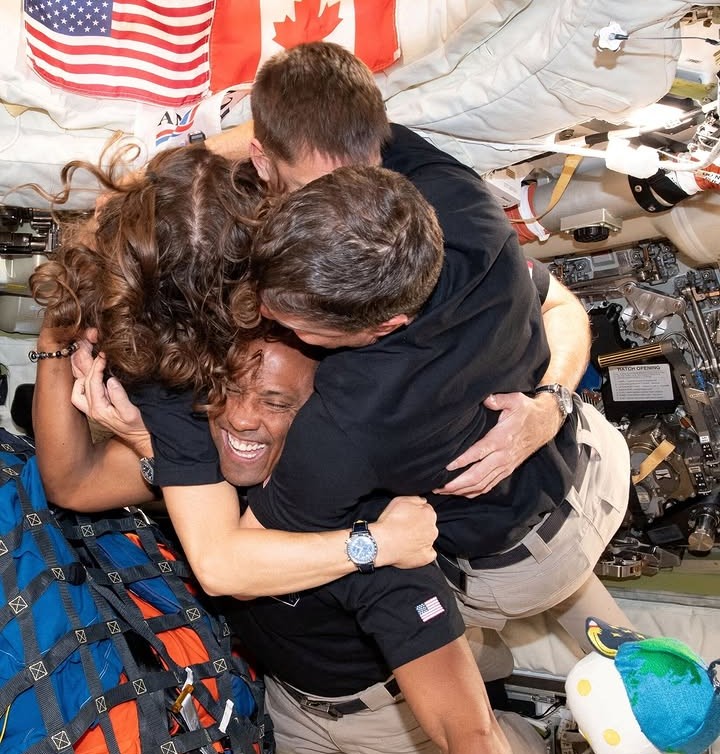
Launched by NASA, the 10-day mission carried four astronauts including Reid Wiseman, Victor Glover, Christina Koch, and Jeremy Hansen on a journey that saw them travel hundreds of thousands of kilometers into deep space, circling the Moon before returning safely to Earth. Their spacecraft, Orion spacecraft, endured the intense heat of re-entry before parachuting into the ocean in a precisely executed descent.
PC: France 24
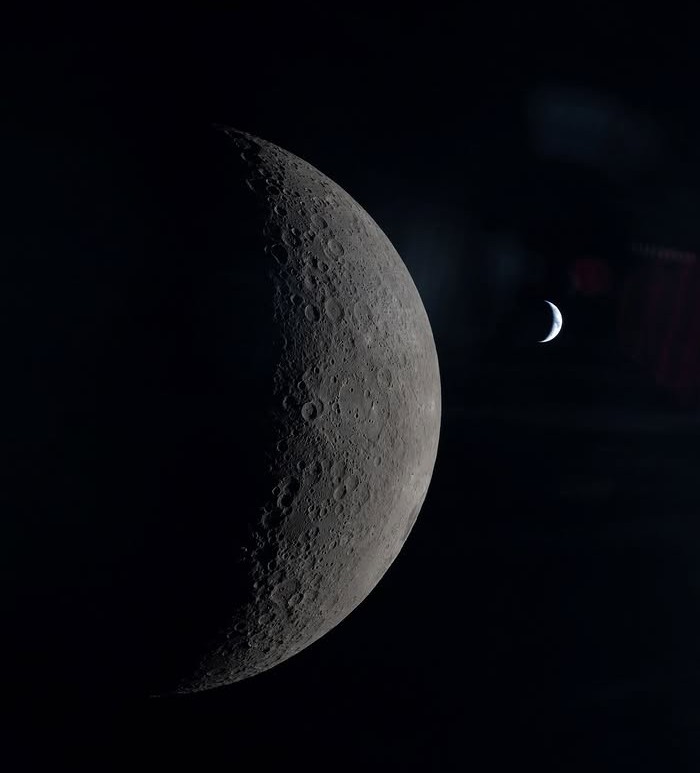
In a defining departure from earlier missions under the Apollo program of the 1970s, Artemis II was designed strictly as a crewed flyby mission, not a landing expedition. It executed a wide free-return trajectory, looping around the far side of the Moon and heading back to Earth without touching the lunar surface. In doing so, it pushed human spaceflight to its farthest distance ever from Earth, surpassing previous crewed records and underscoring the capabilities of next-generation exploration systems.
What sets Artemis II apart is not merely its technical ambition but its symbolism. Glover became the first Black astronaut to journey to the Moon, while Koch became the first woman to make the lunar travel. Also, Hansen, representing the Canadian Space Agency, underscores the mission’s international dimension, signaling a collaborative future in space. These are milestones reflecting a deliberate shift toward inclusivity in exploration.
Further the mission had a poignant, symbolic and emotional human touch to it. It named a newly observed lunar crater “Carroll,” in honour of Carroll Taylor Wiseman, the recently deceased spouse of the Mission’s Commander, Reid Wiseman. Throughout the mission, the world also witnessed the deeply personal stories woven into the fabric of space exploration, where scientific pursuit often intersects with memory and loss.
Beyond symbolism, the mission validates life-support systems, deep-space navigation, radiation shielding, and communication technologies critical for longer-duration exploration, laying the groundwork for a proposed Artemis III, Artemis IV and further explorations which aims to return humans to the lunar surface very soon.
Equally significant was the program’s focus on sustainability. Engineers tested systems designed for reuse and extended missions, marking a shift from the largely single-use architecture of earlier spacecraft. This approach positions the Moon not as a final destination, but as a staging ground for deeper space ambitions, including future missions to Mars.
As recovery teams secured the crew and capsule in the Pacific Ocean earlier in the day, Artemis II emerged not just as a successful mission, but as a statement of intent that humanity is no longer merely revisiting the Moon, but preparing to go farther, stay longer, and explore deeper than ever before.