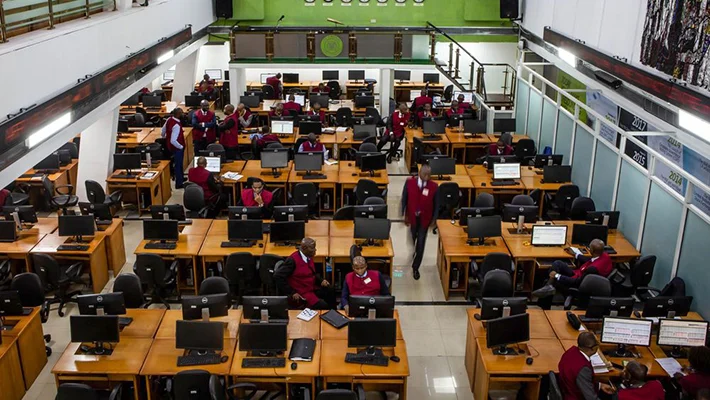
Nigerian equities have overtaken South Korea’s stock market to become the world’s best-performing equity market in dollar terms this year, buoyed by sweeping economic reforms, a stronger naira and improving foreign exchange liquidity, according to a new report by Bloomberg.
The global financial news service reported on Thursday that Nigeria’s benchmark stock index has returned 67 per cent in dollar terms so far this year, edging past South Korea’s Kospi index, which posted a 66 per cent return before sliding into a technical bear market.
Citing data from 92 global stock exchanges tracked by Bloomberg, the report said Nigeria had emerged as the top-performing equity market worldwide, ahead of South Korea, Ghana and Taiwan.
According to the report, “Nigerian equities have overtaken South Korea’s to hand investors the highest dollar-based returns this year, as souring sentiment on artificial-intelligence stocks pushes the Asian nation’s world-beating rally into bear territory.
“The benchmark index in Africa’s largest oil producer has returned 67 per cent in dollar terms this year, outpacing the 66 per cent gain for the Kospi index, according to data from the 92 global stock exchanges tracked by Bloomberg.”
The report explained that while South Korea’s market had lost momentum amid concerns over the sustainability of the global artificial intelligence boom, Nigeria’s market had continued to attract investors on the back of improving macroeconomic fundamentals.
Bloomberg stated that, “The Kospi index entered a technical bear market this week after declining 22 per cent from its June 19 peak as investors increasingly questioned whether the rapid surge in artificial intelligence-related stocks could be sustained.”
It added that the weakening of South Korea’s currency had also weighed on investor returns. According to the report, “The South Korean won has depreciated by about five per cent against the dollar since the beginning of the year, making it the fourth-worst-performing currency in Asia.”
In contrast, Bloomberg noted that Nigeria’s economic reforms have significantly improved investor sentiment. It said, “Nigerian equities have rallied this year on the back of macroeconomic reforms, higher international crude oil prices, and improved foreign exchange liquidity. Nigerian stocks have rallied this year on macroeconomic reforms, higher oil prices and better foreign exchange supply, with the naira gaining 4 per cent since January.”
The report observed that financial institutions listed on the Nigerian Exchange had played a leading role in driving the market’s exceptional performance.
Financial services firms on the Lagos-based bourse have led gains in the benchmark index. Fortis Global Insurance Plc, an insurer, has delivered outsized returns of 1,400 per cent in dollar terms. Unlike the Kospi, companies listed on Nigeria’s stock exchange are not directly exposed to artificial intelligence.
It quoted a Lagos-based trader at StoneX Nigeria Financial Limited, Damilola Okeleye, as saying investor confidence had been strengthened by ongoing economic reforms and expectations surrounding a potential listing of the Dangote Petroleum Refinery.
Okeleye said, “Unlike the Kospi, companies listed on Nigeria’s stock exchange are not directly exposed to artificial intelligence. Investors buying Nigerian equities are attracted by different factors. Nigeria’s economic reforms and the potential listing of the continent’s largest crude processor, Dangote Petroleum Refinery and Petrochemicals FZE, have been a strong driving force behind the gains recorded so far this year.”
Bloomberg noted that expectations surrounding the refinery’s possible listing had added to optimism in the domestic capital market, with investors anticipating that such a move could significantly deepen market capitalisation and attract additional foreign portfolio inflows.
The latest ranking underscores the dramatic turnaround in Nigeria’s financial markets following a series of reforms introduced by President Bola Tinubu’s administration.
Since 2023, the government has implemented major policy changes, including the unification of foreign exchange windows, the removal of petrol subsidies and broader fiscal and monetary reforms aimed at restoring investor confidence.
While the reforms initially triggered high inflation and currency volatility, recent improvements in foreign exchange liquidity, relative stability in the naira and stronger oil prices have encouraged renewed interest from both domestic and foreign investors.
Sustained macroeconomic stability and additional high-profile listings, including that of the Dangote Refinery, could further strengthen Nigeria’s position among emerging market investment destinations.
Source: ThePunch