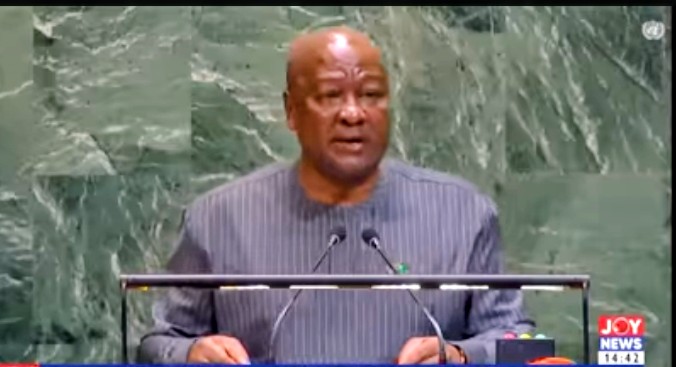
PC: Joy News Ghana
A landmark diplomatic push by Ghana has secured overwhelming global backing at the United Nations, with a resolution recognizing slavery as the gravest crime against humanity attracting 123 votes in favour, three against, and 52 abstentions.
The resolution, widely seen as a moral and political victory for African states and the Global South, underscores the enduring legacy of the transatlantic slave trade and calls for intensified international efforts toward justice, remembrance, and reparative dialogue. Although not legally binding, such resolutions carry significant symbolic weight and often shape global policy discourse.
The African argument for the UN Resolution was spearheaded by President John Dramani Mahama of Ghana who is African Union’s Champion on Reparation. The resolution urges member states to strengthen education on slavery, promote memorialisation, and address systemic inequalities linked to its legacy.
The three opposing votes from Argentina, Israel, and United States, wary of potential reparations implications, highlight ongoing geopolitical sensitivities surrounding historical accountability.
Meanwhile, the 52 abstentions, including the United Kingdom (UK) and all 27 European Union (EU) member states, reflects a cautious middle ground, with some nations expressing concern over the resolution’s broader legal and financial interpretations.
The vote signals a shifting global consensus, particularly as African nations increasingly assert moral leadership on issues of historical injustice. For Nigeria and other key regional players, the development reinforces calls for a unified continental position on reparatory justice.
As debates continue, Ghana’s diplomatic success marks a defining moment in the global reckoning with slavery, which could reshape international conversations on equity, memory, and restitution for generations to come.